Mark Rober's Business: How Engineering Videos Became CrunchLabs
How a former NASA engineer turned science videos into CrunchLabs, a subscription toy business, plus Netflix shows and record-breaking fundraisers, and what a small educational YouTuber can borrow from the model.
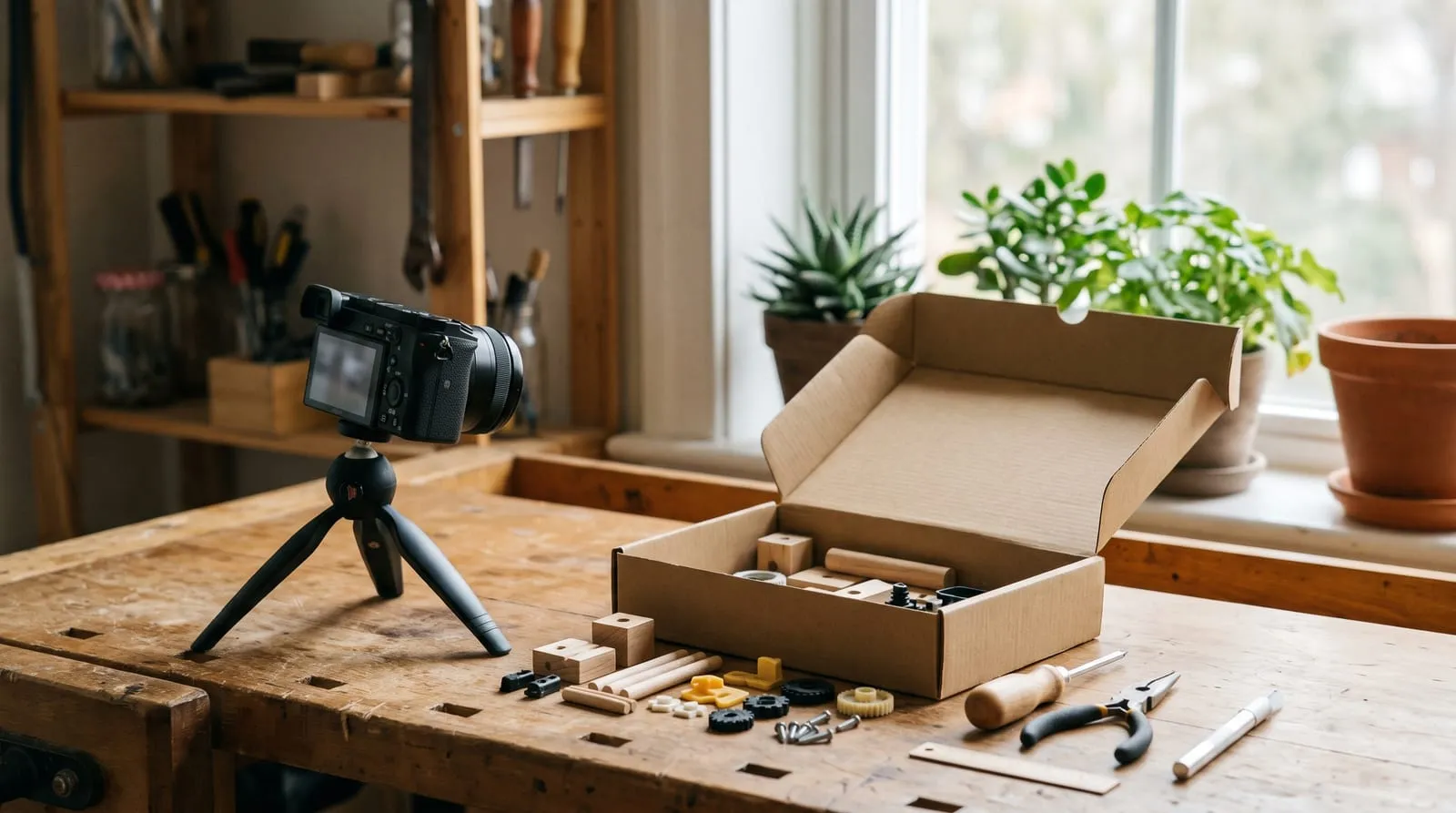
Most creator businesses sell something digital: a course, a template, a membership. Mark Rober sells a cardboard box.
That box, from his company CrunchLabs, arrives with a build-it-yourself toy and a video from Rober explaining the engineering behind it. It’s a neat idea: the YouTube channel makes millions of people curious about engineering, and the subscription turns that curiosity into something they can hold.
You can’t copy the scale. But the logic behind it is one of the clearest examples of a creator building a product that extends the video, rather than one that sits beside it.
This case study separates confirmed public facts from our interpretation. Revenue figures are third-party estimates and are labelled as such.
Mark Rober at a glance
| Background | Engineer at NASA’s Jet Propulsion Laboratory from 2004 for about nine years, seven of them on the Curiosity Mars rover; later a product designer at Apple |
| YouTube | First video in 2011; about 85.8 million subscribers on @MarkRober as of November 8, 2026 |
| Main business | CrunchLabs, founded in 2022: monthly and bi-monthly build kits for kids, teens and adults |
| Media | Netflix series from CrunchLabs; earlier TV with Jimmy Kimmel and Warner Bros. Discovery |
| Fundraising | Co-led #TeamTrees and #TeamSeas with MrBeast |
| Reported earnings | Forbes estimated $30 million in its 2026 Top Creators list (gross, before expenses; reported by Tubefilter) |
The short version
- An engineer with real credibility started making videos that turned engineering into entertainment.
- His first viral video became a product almost immediately, years before CrunchLabs.
- The channel grew on a slow, high-effort cadence: fewer videos, each built around one question and one big build.
- CrunchLabs extended the videos into a box: every kit comes with a Rober video that teaches the idea behind it.
- Media and philanthropy followed, each one reinforcing the same promise: make engineering fun.
1. The first product came from the first viral video
Rober’s channel started in October 2011 with a Halloween costume that used two iPads to create the illusion of a hole through his torso. CNN reported in October 2013 that it reached about 1.5 million views in a day.
He didn’t stop at the views. He turned the idea into a costume business, Digital Dudz, which Wired UK and Bloomberg reported was sold to Morphsuits in 2013.
That early move is the most transferable part of his story. Long before he was famous, he treated a video that resonated as evidence of demand, and built a product people could buy.
2. Credibility plus storytelling made the channel
Rober’s background is unusual for a YouTuber. He spent about nine years at NASA’s Jet Propulsion Laboratory, seven of them working on the Curiosity rover, and later worked in Apple’s Special Projects Group.
That credibility matters, but it isn’t what made the channel grow. His videos follow a recognisable shape (this is our reading, not a template he has published):
- One question or challenge: can you build a squirrel-proof bird feeder, or catch package thieves?
- A real build that the viewer watches come together.
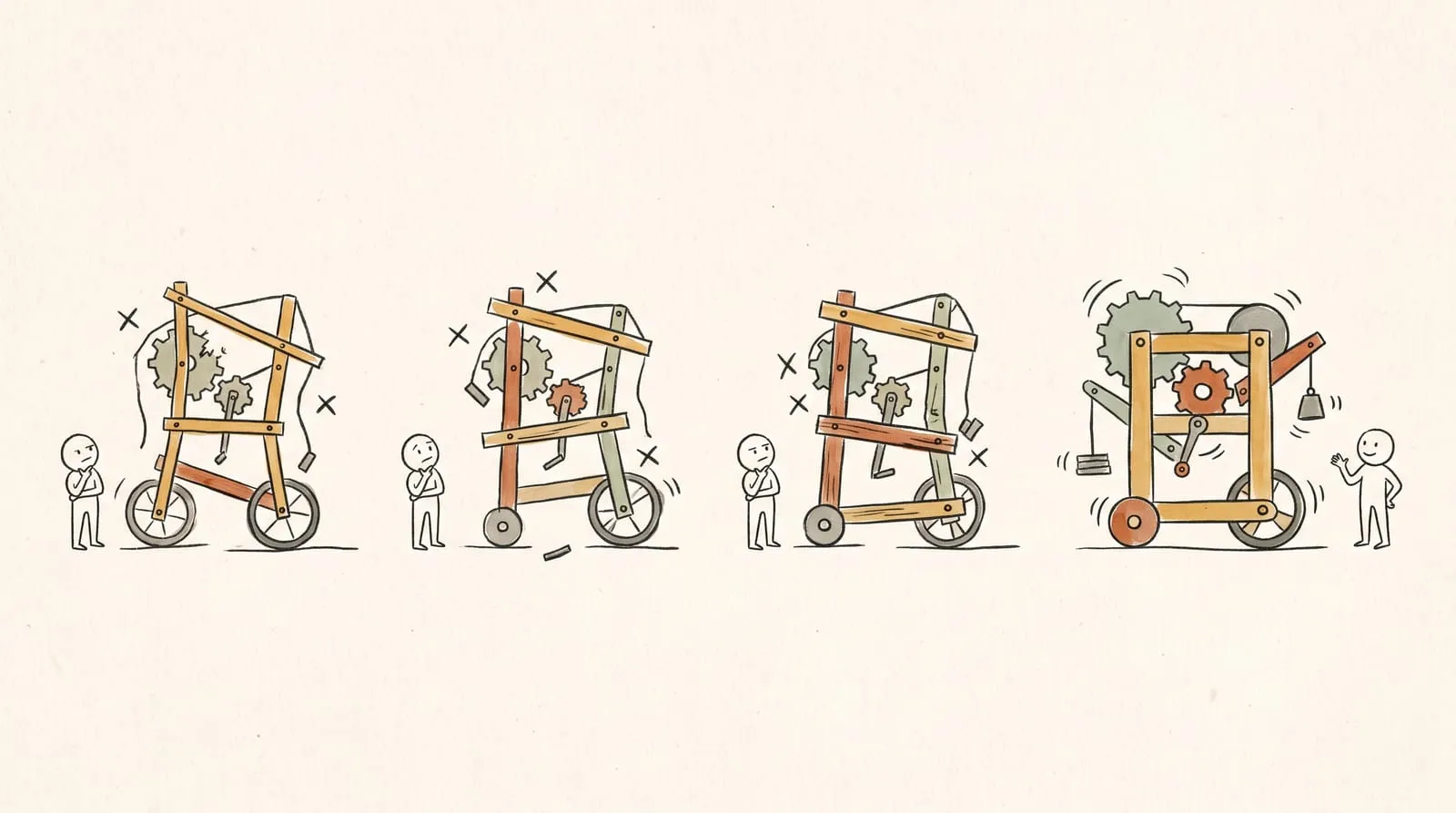
- Visible failure: prototypes that don’t work, shown on camera.
- A payoff: the reveal or test the viewer has been waiting for.
His TEDxPenn talk, The Super Mario Effect, explains part of the thinking: people learn more when failure is treated as part of the game rather than something to avoid. The videos make failure entertaining, which is also why they teach well.
His breakout came in December 2018 with the “glitter bomb” package-thief trap, which the BBC reported drew around 25 million views in a day. It’s worth knowing that he later removed some clips from that video after learning they had been staged by people working with a helper, and said so publicly.
3. Fewer, bigger videos
Rober has said in interviews, including on How I Built This in 2024, that he publishes roughly one main video a month. Each one takes weeks of engineering, filming and editing.
The trade-off is clear: fewer uploads, but each one is an event that viewers share and come back to. The library keeps earning attention for years.
For a small channel, the lesson isn’t to post once a month. It’s that one excellent video on a question your audience cares about can do more than four rushed ones.
4. CrunchLabs: a product that extends the video
CrunchLabs was founded in 2022, with Rober as CEO. It sells three subscriptions (prices from CrunchLabs’ product pages, checked November 8, 2026):
| Product | For | What arrives | Price |
|---|---|---|---|
| Creative Kit | Ages 6–10 | Creative builds for younger kids | Similar to the Build Box; check the current price |
| Build Box | Ages 8–13 | One build-it-yourself toy a month | $32.95 a box; $27.45 a box on an annual plan paid up front ($329.40 a year) |
| Hack Pack | Ages 14 and up | A programmable robot built on an Arduino microcontroller, every other month | $79.95 a box; $66.65 a box on an annual plan ($399.95 a year) |
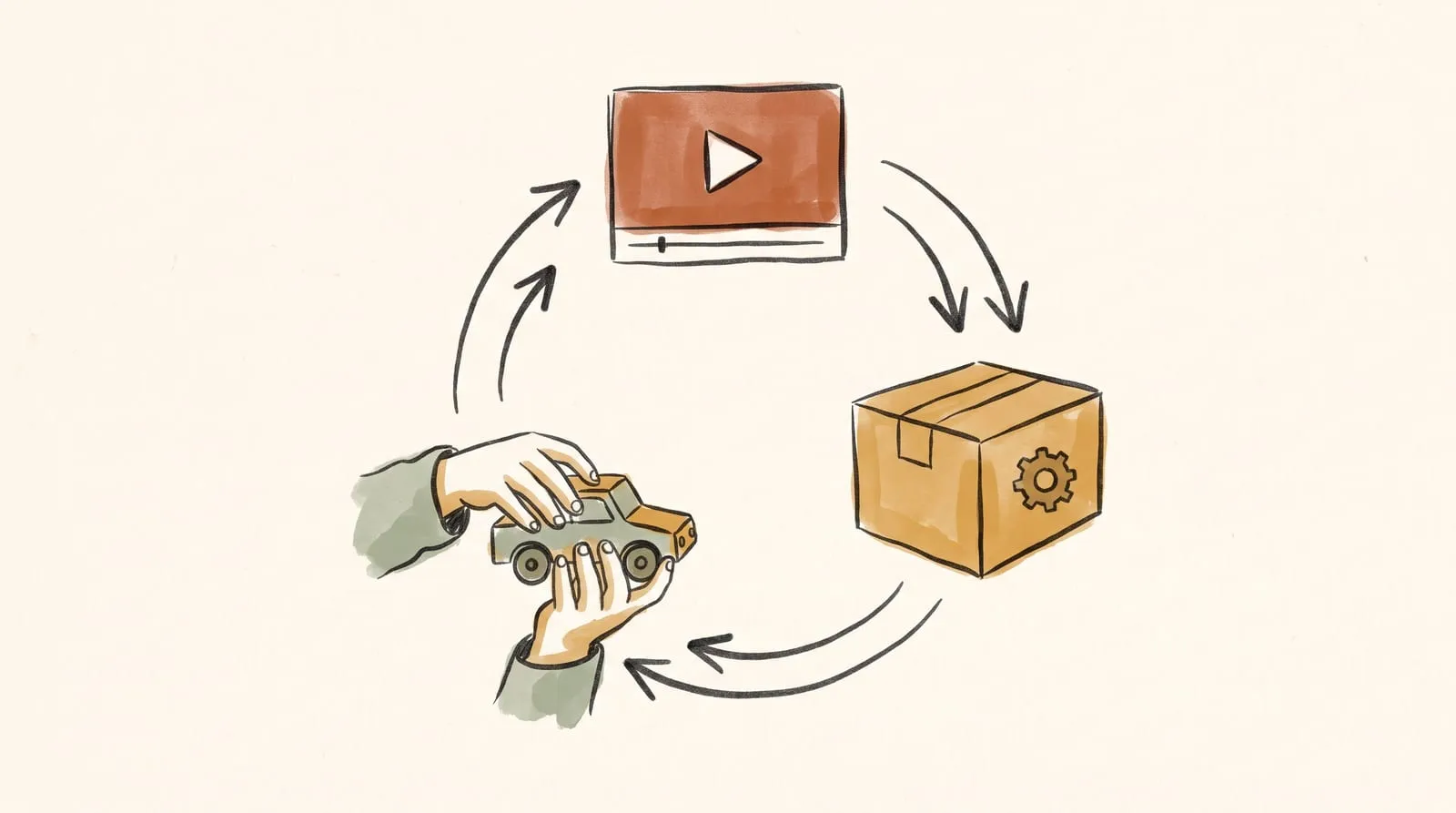
The connection to the channel is the clever part. The Build Box page promises a fun educational video from Mark Rober with every box, and the Hack Pack includes exclusive videos to help subscribers hack their robots.
Our interpretation of the model:
- The free channel creates curiosity at enormous scale.
- The box turns curiosity into a hands-on lesson, guided by the same person.
- The subscription makes it recurring, so revenue doesn’t depend on the next upload.
- Every video on the main channel is, indirectly, marketing for a product that feels like more of the same thing.
CrunchLabs says it has shipped “millions of boxes” and reports 97% customer satisfaction. Those are company claims. No reputable outlet has published CrunchLabs’ revenue, so we won’t estimate it.
5. Media and philanthropy reinforce the same promise
Rober’s other projects all point back to “engineering is fun”:
- Netflix: in August 2025 Netflix announced a kids’ competition series from CrunchLabs for 2026, and that existing CrunchLabs experiments would come to the service.
- Earlier TV: Revengineers with Jimmy Kimmel (2020) and This Is Mark Rober on Warner Bros. Discovery (2023).
- #TeamTrees (2019, with MrBeast): the official site reports more than 25 million trees and more than $24 million raised.
- #TeamSeas (2021, with MrBeast): the official site reports its goal was met and over 34 million pounds of trash removed.
- Class CrunchLabs: a free STEM curriculum announced at TED in 2026. Reports of what it cost differ, so we don’t give a figure.
None of these is a random side project. Each one gives the same audience another way to connect with the same idea.
What a small educational YouTuber can copy this month
1. Treat a video that resonates as a product signal
Rober’s first viral video became a product within weeks. Look at your best-performing video and its comments. Is there something people want to do, make or own after watching? That’s your first product idea.
2. Make the product an extension of the video
The CrunchLabs box is “the video, but in your hands.” For a digital creator, that might be:
- a printable build guide or parts list for a project video;
- a template or worksheet that walks through what the video explained;
- a short paid workshop that goes one level deeper.
Our guide on why your first digital product should remove one repeated question covers how to pick one.
3. Build the format around one question and visible failure
Start each video with a single question the viewer wants answered. Show what didn’t work. Hold the payoff until the end. This is free to copy and suits almost any educational niche.
4. Capture interest before you build
Before making a product, collect interest. An email list is the simplest version of a waitlist; see how to build an email list from YouTube.
What not to copy
- Physical subscription boxes. Inventory, shipping, safety testing and customer service are a different business from making videos. Start digital.
- The production budget. Rober’s videos involve teams, workshops and weeks of building. Copy the structure, not the spend.
- A monthly cadence before you have a library. A slow schedule works when a back catalogue keeps earning views. A new channel usually needs more at-bats.
- Mega-fundraisers. #TeamTrees worked because of combined reach in the hundreds of millions.
- Net-worth guesses. Forbes’ figures are estimates of gross earnings, not profit or wealth. Don’t use anyone’s as a forecast for your own channel.
The Creator Almanack takeaway
Mark Rober’s business works because every part of it says the same thing. The videos make engineering fun, the box lets you do the engineering, the TV shows reach new audiences with the same promise, and the fundraisers turn that goodwill into something bigger.
For a small creator, the lesson is to make your first product feel like the next step after your best video, not a separate thing for sale.
Sources and evidence
- CrunchLabs press page: founding year, leadership, product lines and company claims.
- CrunchLabs Build Box and Hack Pack: prices and included videos, checked November 8, 2026.
- Mark Rober’s YouTube channel: subscriber count as of November 8, 2026.
- TEDxPenn: The Super Mario Effect (2018).
- CNN (October 18, 2013) and Wired UK (August 23, 2013): first video and Digital Dudz; Bloomberg (October 18, 2013) on the sale to Morphsuits.
- BBC (December 18, 2018) on the glitter-bomb video; USA Today (January 23, 2019) on the removed clips.
- Netflix Tudum (August 18, 2025): the CrunchLabs series announcement.
- #TeamTrees and #TeamSeas official totals, checked November 8, 2026.
- Tubefilter on Forbes Top Creators 2026 (June 23, 2026): reported earnings estimate.
- How I Built This with Guy Raz, “CrunchLabs: Mark Rober” (April 2024): publishing cadence.
This is an editorial case study, not a financial forecast. It contains no affiliate links. Images are original illustrations, not photographs of Mark Rober.